
Let’s be honest: not every interior design trend deserves a place in your home.
Every year, a fresh wave of interior design trends sweeps through Pinterest boards, Instagram feeds, and home improvement blogs, and homeowners rush to follow them. New wallpaper here, a trendy sofa there, a custom kitchen feature tucked into the corner. It all looks stunning in the photos.
Then you actually live with it.
The truth is, even professional interior designers, people who live and breathe this stuff, have fallen for trends they later regret. And if the pros can slip up, the rest of us definitely can. So before you commit to that Instagram-famous look, it’s worth hearing what designers wish they had known first.
Here are the interior design trends that designers regret following, what went wrong, and, most importantly, what actually works instead.
1. The Accent Wall: A Trend That Often Misfires
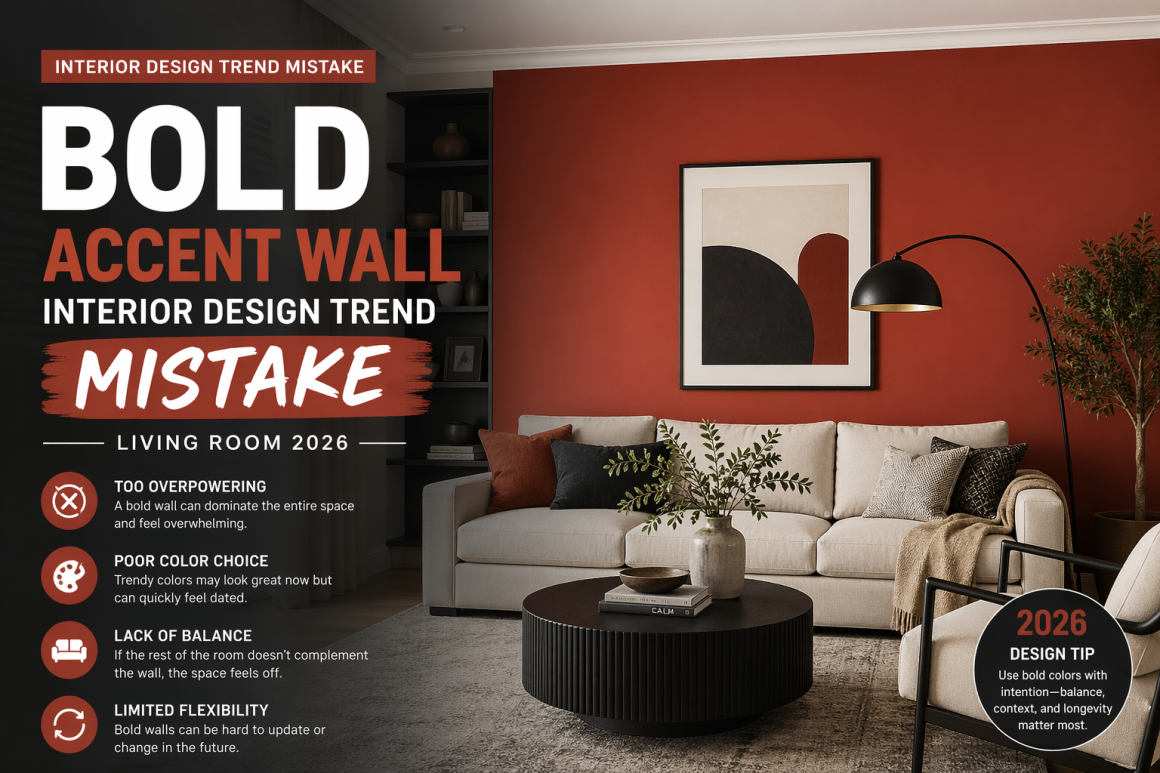
At its peak, the accent wall was everywhere. One boldly painted or wallpapered wall in an otherwise neutral room felt modern, punchy, and intentional. Designers loved it. Homeowners loved it. And then… they didn’t.
The problem with accent walls is balance – or the lack of it. When you single out one wall for special treatment, you’re essentially telling the eye: “Pay attention here, but not there.” That works beautifully in theory, but in practice, it can make a room feel visually lopsided. The treated wall becomes a statement that the rest of the room can’t answer back.
According to Maren Baker, founder and principal designer of Maren Baker Design, the single-wall approach often highlights the wall rather than the room – drawing focus to a surface when the real goal is to create a complete, cohesive space.
What to do instead: If you love texture, color, or pattern – go all in. Apply it to all four walls and let the room breathe as a whole. A full room of , a rich paint color, or a subtle wallpaper is far more sophisticated than one wall doing all the heavy lifting. If you want a focal point without committing to full coverage, layer in artwork or a gallery wall instead – these can be changed without a renovation.
2. The Leather Sofa: Style That Doesn’t Survive Real Life
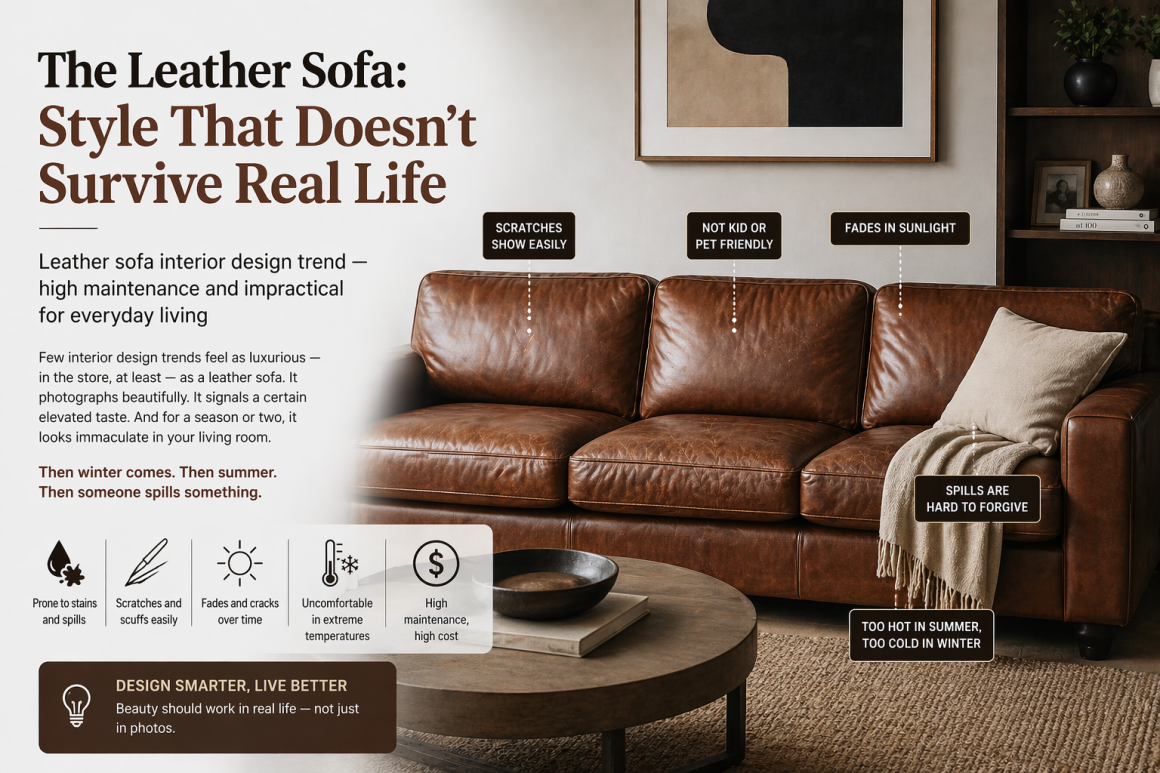 Few interior design trends feel as luxurious, in the store, at least, as a leather sofa. It photographs beautifully. It signals a certain elevated taste. And for a season or two, it looks immaculate in your living room.
Then winter comes. Then summer. Then someone spills something.
Julia Newman, founder and principal designer of Julia Adele Design, says the leather sofa was the biggest design mistake she made in her own home — despite how good it looked. “It turned out to be high maintenance, and I don’t believe furniture should be something you’re constantly worried about,” she explains. Leather sofas are cold and stiff in winter months, uncomfortably warm and sticky in summer, and show every scratch and crack over time.
When a sofa requires that level of vigilance, the design has stopped serving the people living with it, which is the opposite of what good interior design should do.
What to do instead: Performance fabric sofas think bouclé, velvet, or high-quality linen blends, offer far more warmth, comfort, and practicality. Performance fabrics are engineered to resist stains and wear without sacrificing aesthetics. If you love the leather look, use it as an accent: a leather armchair, footstool, or ottoman can add that sophisticated edge without the full-sofa commitment.
3. The Appliance Garage: A Kitchen Trend With Hidden Flaws
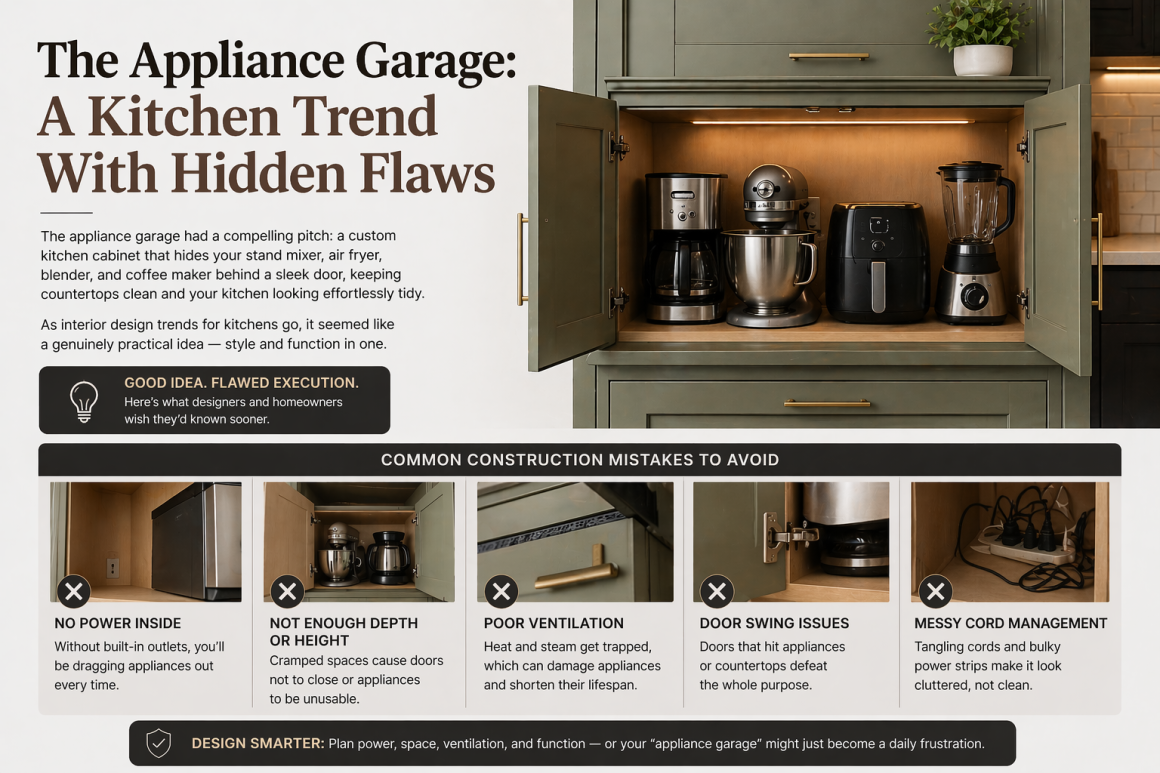 The appliance garage had a compelling pitch: a custom kitchen cabinet that hides your stand mixer, air fryer, blender, and coffee maker behind a sleek door, keeping countertops clean and your kitchen looking effortlessly tidy. As interior design trends for kitchens go, it seemed like a genuinely practical idea — style and function in one.
The execution, however, is trickier than it looks.
Lesley Myrick, CEO and principal designer of Lesley Myrick Interior Design, is candid about this one. “One design choice I made in my own kitchen that I would change if I could is my appliance garage,” she says. “I still love the concept, but I didn’t realize how much the construction details would affect the end result.” Specifically, her cabinet ended up shallower than planned due to construction constraints, and the lift-up door style swings to eye level, feeling obstructive during everyday use.
The concept is sound, but the details determine whether it becomes a dream feature or a daily annoyance.
What to do instead: If you’re planning an appliance garage, borrow depth from between wall studs for a truly functional cabinet, and choose a double pocket door rather than a lift-up style. Consult a kitchen designer about your appliances’ actual dimensions before a single cabinet is built. For a simpler solution, open shelving tucked into a dedicated kitchen nook keeps appliances accessible without the construction commitment.
4. Shiplap: From Farmhouse Staple to Overplayed Cliché
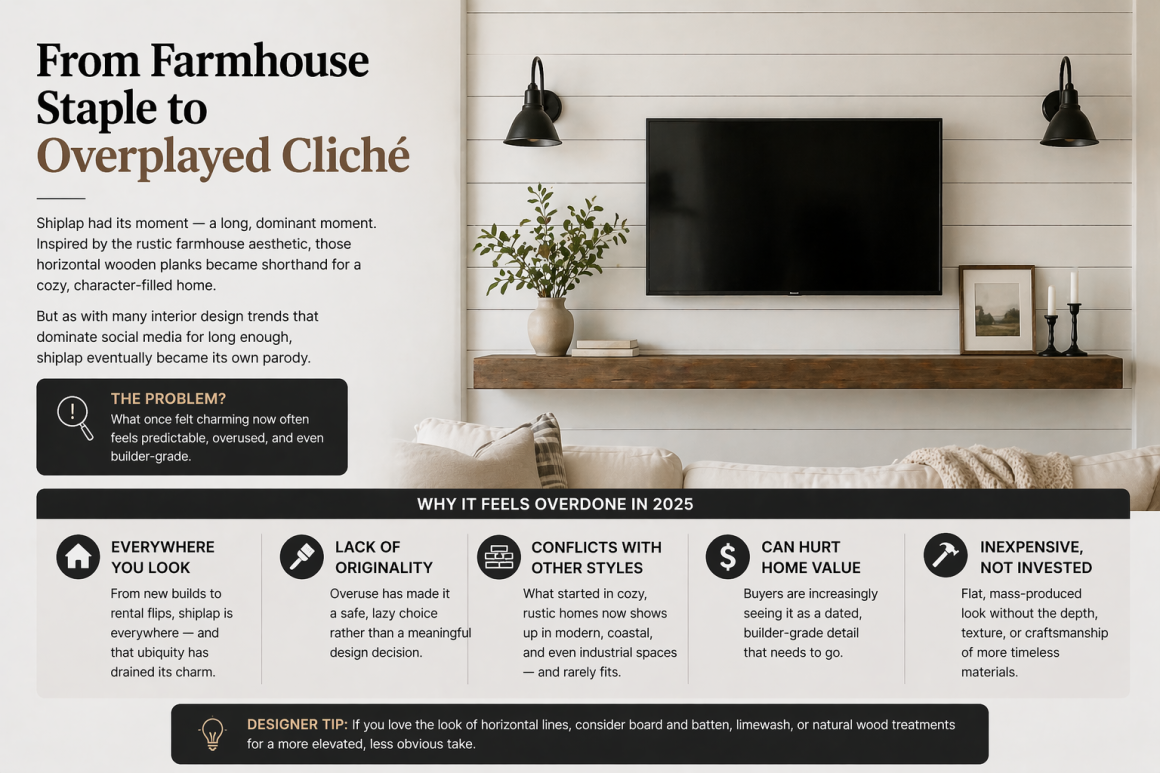 Shiplap had its moment, a long, dominant moment. Inspired by the rustic farmhouse aesthetic, those horizontal wooden planks became shorthand for a cozy, character-filled home. But as with many interior design trends that dominate social media for long enough, shiplap eventually became its own parody.
Designers today widely agree that shiplap has moved from fresh to formulaic. When a design element appears on feature walls across millions of homes, it loses the individuality that made it appealing in the first place. What once read as thoughtful craftsmanship now reads as a builder-grade default.
What to do instead: If the goal is a feature wall with texture and character, there are far more distinctive ways to achieve it. Geometric panelling, venetian plastering, textured tiles, bold wallpaper, and decorative wainscoting all deliver a more individual result. The point of a feature wall is to be special, and special requires moving beyond what every home on the block already has.
5. Chasing Trends Over Timelessness: The Bigger Mistake
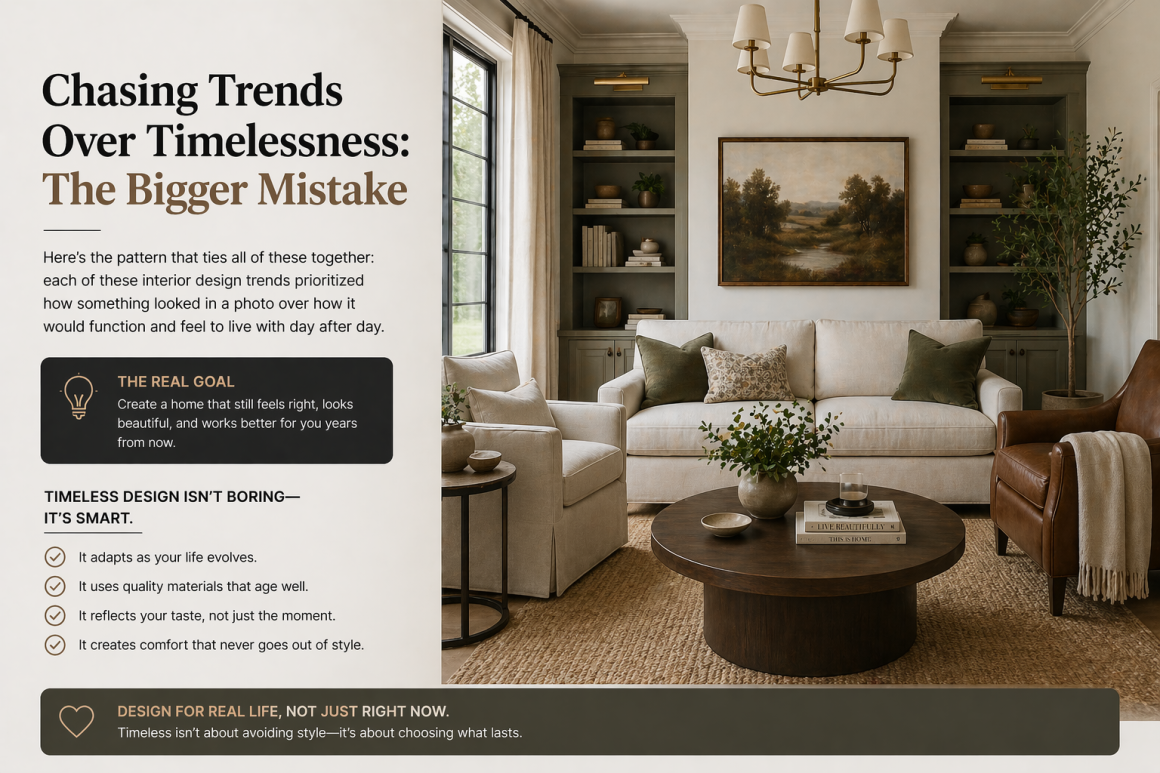 Here’s the pattern that ties all of these together: each of these interior design trends prioritized how something looked in a photo over how it would function and feel to live with day after day.
This is the fundamental tension at the heart of every trending aesthetic. The look that makes your home photogenic for Instagram is not always the look that makes your home feel good at 7am on a Tuesday, or when you have guests over, or when you’ve had the same accent wall for three years and it no longer feels fresh.
The designers who come out on top, in their clients’ homes and their own, are the ones who ask a simple question before following any trend: will I still love this in five years? If the honest answer is uncertain, the trend probably isn’t worth the investment.
Interior Design Trends Are Actually Worth Follow in 2026?
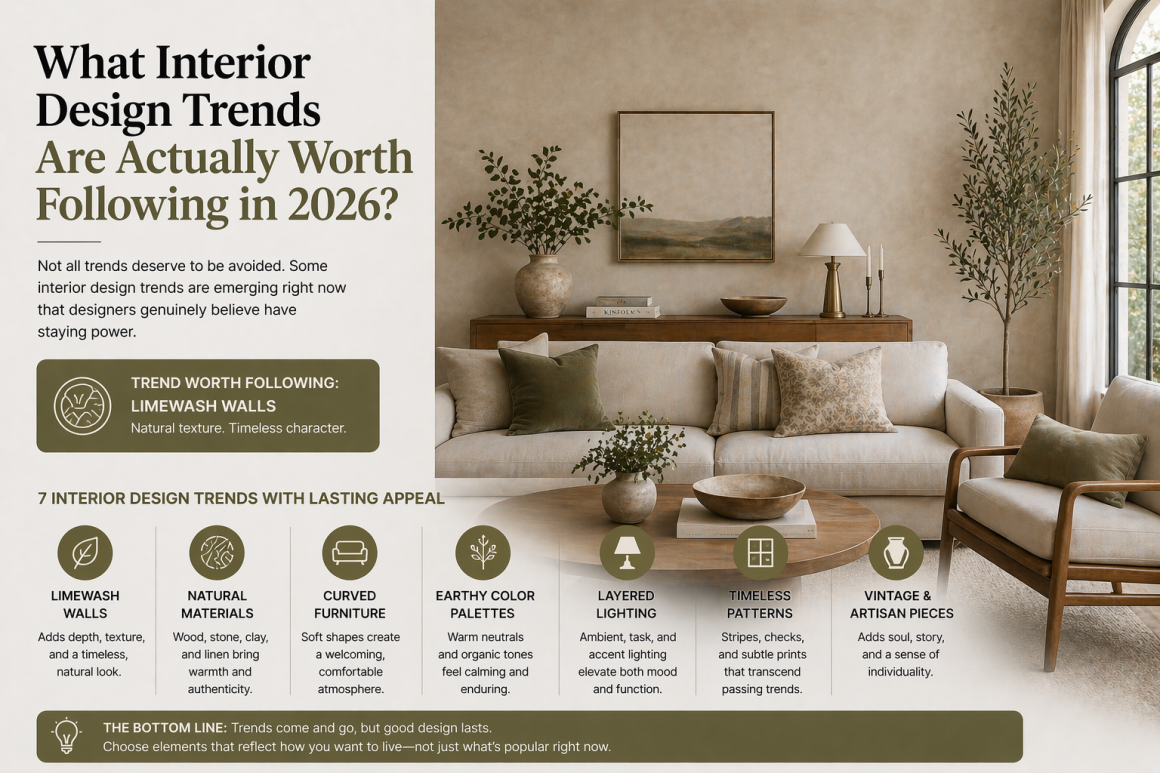 Not all trends deserve to be avoided. Some interior design trends are emerging right now that designers genuinely believe have staying power.
Limewash walls continue to gain momentum among designers who love the depth and texture they bring to a space. The soft, matte finish and organic quality feel both timeless and contemporary — it’s a trend that doesn’t look like a trend, which is always a good sign.
Natural stone is having a well-earned renaissance. Marble, quartzite, and travertine used as countertops, backsplashes, and feature walls are replacing the once-ubiquitous white quartz replicas. Real material, real variation, real beauty.
Darker, moodier color palettes, terracotta, deep green, chocolate brown, rich burgundy, are increasingly popular among designers who want spaces that feel rich and grounded rather than sterile and bright. These tones hold up over time in a way that greige never quite managed.
Performance fabric sofas and seating are also on the rise. As the design world pulls away from aesthetics-first choices, there’s a growing movement toward interiors that actually feel good to live in: textured fabrics, warm lighting, natural materials, considered layering. Design for the senses, not the screen.
And underpinning all of these is a broader shift: away from following trends entirely, and toward building spaces that reflect personal taste, real lifestyle needs, and long-term comfort.
Final Thought: The Best Interior Design Trend Is No Trend at All
The most enduring spaces are never purely trend-driven. They borrow from what’s current but are anchored in something more personal, the way you move through your home, the things that genuinely bring you comfort, the materials you find beautiful not because a mood board told you to but because you actually do.
Before you follow the next wave of interior design trends, ask yourself what you actually need from the space. Then talk to a designer who will tell you the truth, including about the trends they regret.

Vanessa Calas, a 37-year-old writer and editor, boasts a remarkable 12-year career specializing in garden and home décor topics. Her passion for creative expression and design led her to graduate with honors from the Princeton University, Princeton in 2011, where she earned a Bachelor of Arts degree with a focus on the History of Art. Vanessa’s journey in the realm of writing began shortly after, as she immersed herself in the world of gardening and home aesthetics.
With a keen eye for detail and a deep understanding of art history, Vanessa has cultivated her writing skills to become a seasoned expert in the niche. Her ability to articulate the subtleties of design and capture the essence of outdoor and indoor spaces has made her a respected voice in the industry. As a testament to her dedication and proficiency, Vanessa currently serves as a senior editor at Home and the Around Blog.
Vanessa’s contributions to the field extend beyond her role as an editor; she is also recognized for her prowess as a writer. Her articles seamlessly blend informative content with a touch of creativity, making them not only educational but also engaging for readers. With an impressive track record and a passion for transforming spaces into aesthetic wonders, Vanessa Calas continues to leave an indelible mark in the world of garden and home décor writing.